NEXT CARS SPORTS
NEXT AUTO CARS
Showing posts with label Bugatti. Show all posts

2010 Bugatti Sports Cars Veyron from Mansory by Linea Vincero d’Oro


MANSORY understands the importance of combining luxury and technology with the golden aspirations of this unique sports cars. Adding to the list of many modified Bugattis sports cars, Mansory LINEA Vincerò d’Oro has created this incredibly gaudy-looking Veyron. It’s got some design changes, it’s got some gold and it’s one of a kind. However, Mansory will perform this modifications for anyone who has the cash to pay for it.


With the LINEA Vincerò d’Oro, MANSORY has completed its strictly limited series sports cars for the refined Bugatti Veyron 16.4 sports cars. Using targeted changes, MANSORY first transformed the Bugatti Veyron sports cars into the LINEA Vincerò and then, using a special gold-coloured alloy, into the unique LINEA Vincerò d’Oro.


This one-off super car tune job by Mansory is perfect for the individual with nearly inexhaustible wealth. The Mansory Linea Vincero d’Oro version of the Bugatti Veyron adds a carbon fiber aerodynamics kit and gold details on the grille, the tires, the door handles and gas tank. The interior is equally accented in gold color, but the rest of this beast is all Bugatti sports cars.


Along with such gaudy monstrosities as the Pepto-pink Bentley and the Polo Sport-on-acid Porsche Panamera, Mansory has modified the Veyron sports cars with the Linea Vincero range of accessories, including a full aero kit and highly polished carbon-fiber body panels that include copper threads interwoven into the material for even more flash.


MANSORY manufactures almost all the components in the car’s body from ultra-light, high-strength carbon and the autoclave method of hardening under high pressure and high temperatures used during the manufacturing process makes a huge improvement to the quality of the materials. One unique feature of the design of the LINEA Vincero d’Oro is the carbon fabric with inbuilt copper thread used by MANSORY, the metallic sheen of which really brings out the exceptional nature of this special sports cars.


2010 Bugatti Sports Cars Veyron from Mansory by Linea Vincero d’Oro
The sideskirts have also been remodelled, as to offer a more stunning look. To give the engine optimal cooling, Mansory has created larger air outlets to the side and rear of the Veyron. The diffuser has also had some work done, as to help with the handling of the sports cars.
Mansory and LINEA Vincero previously introduced a Bugatti sports cars with visual and performance upgrades that cost an extra $985,776 – on top of the sports cars.

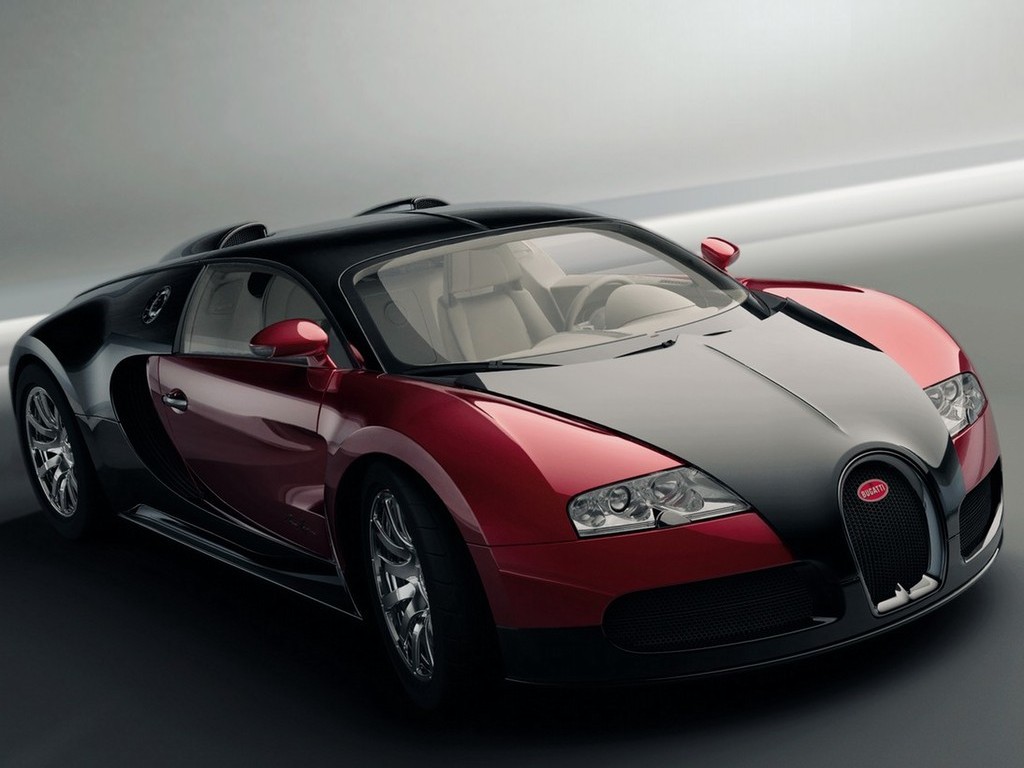
Auto Trend Bugatti Veyron

This is the fastest, most powerful and most expensive production car in history. The Bugatti Veyron 16.4 will do 253mph, has an 8 litre 16-cylinder engine producing in excess of 1000bhp, and a price of £810,000.

Let’s think about that for a moment: 253mph is faster than a Formula One racing car or Concorde at the point of take-off. The Veyron’s power unit, open to the air behind the driver, is four times the size of the engine in your regular family saloon and, boosted by four turbochargers, 10 times as powerful. And the price is 50 times that of the average car.

Of course it doesn’t make sense. Nobody needs a Bugatti Veyron. But that doesn’t diminish its status as an ultimate in technology. It is a billionaire’s prized possession, the automotive equivalent of one of those hideously expensive Swiss watches. And it will be the stuff of dreams, the bedroom poster for a generation of young boys.

Everyone wants to know what it can do. Last week I was one of the fortunate few to find out first hand.

I drove the Veyron on motorways and mountain roads in Sicily and experienced it on the Enna-Pergusa racetrack. I reached no more than three-quarters of its top speed but that’s okay; my American colleague Csaba Csere of Car and Driver magazine had verified its 253mph maximum at the VW test track in northern Germany.

Within the limits of normal if lightly populated roads and sympathetic local police this is still a car that transcends previous experience; there has never been a 1000bhp production model. Yet it has none of the temperament of supercars that are derived from racing machines.

Climb in, press the starter button, engage D on the gear selector lever and off you go. Neither accelerator nor brake is fierce, the steering is accurate but requires no great effort. The engine dawdles if you want to, docile and undemanding, yet when a clear road opens ahead it is ready for acceleration that is beyond normal comprehension.

The Veyron can reach 62mph from a standstill in 2.5sec and 122mph in 7.3sec. When 0-60mph in 7sec is the mark of a quick car, this one is out of the world as we know it — all two tons of it.

When you press the accelerator to the floor — and you had better be prepared for the rocket-like response — the needle on a dial to the left of the instrument panel flicks round to 1001. It’s a power indicator and it has absolutely no use except to give the driver a sense of awe. It should be called a “boast gauge”.

The 240mph McLaren F1, the previous speed champion among road cars, is much lighter but was designed in the 1990s with a different philosophy that deleted all non-essential features, including many of the safety systems that VW made obligatory in the Veyron. The F1 is an expert’s car.
The Ferrari Enzo, Porsche Carrera GT and other recent pretenders to the supercar throne are essentially racing cars adapted for road use. The Bugatti Veyron is not intended for racing but holds a trump card compared with these: its seven-speed DSG transmission. It works brilliantly and contributes to the Bugatti’s ease of progress and level of driving refinement.

So, the best car in the world? It depends on your attitude. For all its phenomenal range of capability this is not a car for the shopping run (do billionaires go shopping?) or even a weekend away. Its boot can carry just a briefcase, the engine is always noisy, visibility anywhere but directly forward is restricted, it is more than 6ft wide and parking is a nightmare. Oh, and there are no roads where you can do 250mph.

You could also argue that a car that costs so much should be perfect. To do so would be churlish. The Bugatti Veyron 16.4 is a magnificent achievement.

Auto Trend Bugatti Veyron

This is the fastest, most powerful and most expensive production car in history. The Bugatti Veyron 16.4 will do 253mph, has an 8 litre 16-cylinder engine producing in excess of 1000bhp, and a price of £810,000.

Let’s think about that for a moment: 253mph is faster than a Formula One racing car or Concorde at the point of take-off. The Veyron’s power unit, open to the air behind the driver, is four times the size of the engine in your regular family saloon and, boosted by four turbochargers, 10 times as powerful. And the price is 50 times that of the average car.

Of course it doesn’t make sense. Nobody needs a Bugatti Veyron. But that doesn’t diminish its status as an ultimate in technology. It is a billionaire’s prized possession, the automotive equivalent of one of those hideously expensive Swiss watches. And it will be the stuff of dreams, the bedroom poster for a generation of young boys.

Everyone wants to know what it can do. Last week I was one of the fortunate few to find out first hand.

I drove the Veyron on motorways and mountain roads in Sicily and experienced it on the Enna-Pergusa racetrack. I reached no more than three-quarters of its top speed but that’s okay; my American colleague Csaba Csere of Car and Driver magazine had verified its 253mph maximum at the VW test track in northern Germany.

Within the limits of normal if lightly populated roads and sympathetic local police this is still a car that transcends previous experience; there has never been a 1000bhp production model. Yet it has none of the temperament of supercars that are derived from racing machines.

Climb in, press the starter button, engage D on the gear selector lever and off you go. Neither accelerator nor brake is fierce, the steering is accurate but requires no great effort. The engine dawdles if you want to, docile and undemanding, yet when a clear road opens ahead it is ready for acceleration that is beyond normal comprehension.

The Veyron can reach 62mph from a standstill in 2.5sec and 122mph in 7.3sec. When 0-60mph in 7sec is the mark of a quick car, this one is out of the world as we know it — all two tons of it.

When you press the accelerator to the floor — and you had better be prepared for the rocket-like response — the needle on a dial to the left of the instrument panel flicks round to 1001. It’s a power indicator and it has absolutely no use except to give the driver a sense of awe. It should be called a “boast gauge”.

The 240mph McLaren F1, the previous speed champion among road cars, is much lighter but was designed in the 1990s with a different philosophy that deleted all non-essential features, including many of the safety systems that VW made obligatory in the Veyron. The F1 is an expert’s car.
The Ferrari Enzo, Porsche Carrera GT and other recent pretenders to the supercar throne are essentially racing cars adapted for road use. The Bugatti Veyron is not intended for racing but holds a trump card compared with these: its seven-speed DSG transmission. It works brilliantly and contributes to the Bugatti’s ease of progress and level of driving refinement.

So, the best car in the world? It depends on your attitude. For all its phenomenal range of capability this is not a car for the shopping run (do billionaires go shopping?) or even a weekend away. Its boot can carry just a briefcase, the engine is always noisy, visibility anywhere but directly forward is restricted, it is more than 6ft wide and parking is a nightmare. Oh, and there are no roads where you can do 250mph.

You could also argue that a car that costs so much should be perfect. To do so would be churlish. The Bugatti Veyron 16.4 is a magnificent achievement.

Styling Bugatti Veyron

Not just a super car that carries on the name of racing driver Pierre Veyron, who, while racing for the original Bugatti car manufacturer, won the 24 hours of Le Mans in 1939, Bugatti Veyron 16.4 is the second fastest car in the world and the most powerful, it can easily pass as a super hero`s car like Batman. It has the fastest acceleration speed, reaching 60 mph in 2.6 seconds.
Endowed with W16 engine-16 cylinders in 4 banks of 4 cylinders fed by four turbochargers, a dual-clutch DSG computer-controlled manual transmission, the Veyron has a length is 4462 mm (175.8 in) a wide of 1998 mm (78.7 in) and hight of 1206 mm (47.5 in). Counting a sum of 10 radiators, for the engine cooling system, for transmission oil, a heat exchanger for the air to liquid intercoolers, for engine oil etc., the car has a power to weight ratio of 529 bhp/tonne.
If we talk about performance we are dazzled by this supercars power to reach 200 and 300 km/h (124 and 186 mph) in 7.3 and respectively 16.7 seconds, wining for herself the name of the quickest-accelerating production car in history. If we count the fact that the top speed of Bugatti Veyron is 253.2 miles per hour (407.5 km/h), a speed limited electronically to prevent tire damage (it can run even faster) we can understand why this spectacular car must consume 40.4 L/100 km (4.82 mpg) when it`s running at top speed and in city driving 24.1 L/100 km.


Styling Bugatti Veyron

Not just a super car that carries on the name of racing driver Pierre Veyron, who, while racing for the original Bugatti car manufacturer, won the 24 hours of Le Mans in 1939, Bugatti Veyron 16.4 is the second fastest car in the world and the most powerful, it can easily pass as a super hero`s car like Batman. It has the fastest acceleration speed, reaching 60 mph in 2.6 seconds.
Endowed with W16 engine-16 cylinders in 4 banks of 4 cylinders fed by four turbochargers, a dual-clutch DSG computer-controlled manual transmission, the Veyron has a length is 4462 mm (175.8 in) a wide of 1998 mm (78.7 in) and hight of 1206 mm (47.5 in). Counting a sum of 10 radiators, for the engine cooling system, for transmission oil, a heat exchanger for the air to liquid intercoolers, for engine oil etc., the car has a power to weight ratio of 529 bhp/tonne.
If we talk about performance we are dazzled by this supercars power to reach 200 and 300 km/h (124 and 186 mph) in 7.3 and respectively 16.7 seconds, wining for herself the name of the quickest-accelerating production car in history. If we count the fact that the top speed of Bugatti Veyron is 253.2 miles per hour (407.5 km/h), a speed limited electronically to prevent tire damage (it can run even faster) we can understand why this spectacular car must consume 40.4 L/100 km (4.82 mpg) when it`s running at top speed and in city driving 24.1 L/100 km.


Bugatti 16C Galibier Car

Detail specification new sport luxury car design prototype Bugatti 16C Galibier High-Powered Sedan pictures gallery. The exclusive car designs technology W16-powered sedan currently under development. The car company manufacturer of the fastest car on the face of the earth, the Bugatti Veyron, are now willing to craft from the fastest saloon of all those have been sold, the Bugatti 16C Galibier. You could say that this car is a modern interpretation of the Bugatti Type 57 of the 30’s, which by then had a name which referred to the Galibier four-door sedan. For the time being is in its prototype stage and are still responsible for Bugatti sought the views of the media and customers to evaluate the possibility of building it. Has not been discussed so much of its mechanics, but what is certain is who would be the Bugatti Veyron W16 for close to 1000 horsepower of this and certainly exceeds the 370 km / h. One of the most curious details we have at the top of the hood, which is divided into two parts as in the old Bugatti.

Bugatti 16C Galibier Car

Detail specification new sport luxury car design prototype Bugatti 16C Galibier High-Powered Sedan pictures gallery. The exclusive car designs technology W16-powered sedan currently under development. The car company manufacturer of the fastest car on the face of the earth, the Bugatti Veyron, are now willing to craft from the fastest saloon of all those have been sold, the Bugatti 16C Galibier. You could say that this car is a modern interpretation of the Bugatti Type 57 of the 30’s, which by then had a name which referred to the Galibier four-door sedan. For the time being is in its prototype stage and are still responsible for Bugatti sought the views of the media and customers to evaluate the possibility of building it. Has not been discussed so much of its mechanics, but what is certain is who would be the Bugatti Veyron W16 for close to 1000 horsepower of this and certainly exceeds the 370 km / h. One of the most curious details we have at the top of the hood, which is divided into two parts as in the old Bugatti.